
There’s a specific kind of pressure that hits the moment you decide to actually ship a side project: the urge to have “something” live before the real product is anywhere close to done. A coming-soon page feels like the easy part — throw up a headline and an email field, right? — but it’s surprisingly common to lose a whole evening to it, because it quietly turns into a mini web-dev project of its own.
This is about avoiding that trap: what a coming-soon page actually needs, and how to have one live in less time than it took to read this sentence twice.
Why this page eats more time than it should
The instinct is to build the coming-soon page inside your actual project — same framework, same repo, same deploy pipeline as the thing you haven’t built yet. That seems efficient, but it means the page inherits every dependency and build step of an app that doesn’t exist yet. You end up debugging a Next.js routing issue for a page that’s three sentences and a form.
The second trap is scope creep. A coming-soon page doesn’t need a design system, a component library, or even much CSS — but once you’re already in your editor with your usual tools open, it’s easy to start “just polishing it a bit,” and an hour later you have a fully responsive hero section for a product with zero lines of backend code written.
What the page actually needs to do
- Say what the thing is, in one sentence. Not a tagline — an actual sentence a stranger could understand with zero context.
- Capture interest, if you want to. An email field is enough. You don’t need double opt-in, a welcome sequence, or list segmentation on day one.
- Look intentional, not broken. It doesn’t need to be beautiful, but a page with default browser styling reads as “unfinished,” which undersells something you haven’t even launched yet.
- Be reachable at your real domain. Not a subdomain you’ll forget to redirect later — the actual URL you’ll use once the product ships.
Why it should live outside your main codebase
Keeping the coming-soon page completely separate from your actual application isn’t just about avoiding build-tool friction — it also means the page can go live today, independent of how far along the real product is. You’re not blocked on auth, a database, or a deploy pipeline that doesn’t exist yet.
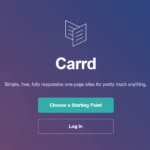
This is exactly the gap a one-page site builder fills. Carrd is built for pages that are genuinely just pages — no app logic, no routes, no build step — which means a coming-soon page goes from idea to live URL in the time it takes to write the copy, not the time it takes to scaffold a project.
Setting it up without overthinking it
The headline does the actual work
Most coming-soon pages fail at the one job they have: explaining what the thing is. “Something big is coming” tells a visitor nothing and gives them no reason to leave an email. “A status page you can edit in under a minute” tells them exactly what to expect and who it’s for.
One field, one button
Name and email is one field too many. Ask for email only — every additional field is a reason for someone to abandon the form, and you don’t need a name to send a launch announcement.
A realistic timeline, or none at all
“Launching soon” with no date reads as vague. A specific month (“Launching October 2026”) reads as real, even if it’s not day-precise. If you genuinely don’t know, it’s better to omit the timeline entirely than to guess wrong and look unreliable when it slips.
What happens after someone signs up
The form submission isn’t the end of the interaction — it’s the start of one, and it’s worth deciding what happens next before you launch the page, not after your first hundred signups arrive with no plan behind them.
- Confirm it worked, immediately. A visible “you’re on the list” message after submitting. Silence reads as broken, even when the email was captured fine.
- Decide if you’ll actually email them before launch. A single “still building, here’s a peek” update partway through keeps the list warm without demanding a full newsletter operation.
- Know where the list lives, and that you can export it. The point of collecting emails is being able to use them later — confirm that’s actually true before you’re relying on it.
What to leave out
Skip the feature list. You don’t have shipped features yet, and describing planned ones in detail either sets expectations you might not hit, or reads as vaporware. Skip social proof too — testimonials and press logos before launch undermine the “coming soon” framing more than they help it. The page’s only job is: what is this, and how do I hear when it’s ready.
Getting the domain right the first time
It’s worth using your real domain from day one rather than a placeholder subdomain you plan to migrate off later. Redirecting an audience you’ve already collected — after they’ve bookmarked or shared the wrong URL — is friction you can avoid entirely by just starting at the right address, even if the “real” product behind it is still months away.
Quick checklist
- Write one clear sentence describing the product — no taglines, no jargon.
- Add a single email field, nothing more.
- Point it at your real domain, not a placeholder you’ll forget to migrate.
- Include a timeline only if you’re reasonably confident in it.
- Build it outside your main codebase so it’s live today, independent of how far along the real product is.
The best coming-soon page is the one that’s actually live while you build the real thing — not the polished version still sitting in a branch three weeks from now. Ship the simple version first.
 Tested firsthand